




- HOME
- >
- News
- >
- Industry news
How to Use Industrial Floor Scrubbers Correctly
2026-06-13 16:06Use Scientifically for Greater Efficiency
Industrial floor scrubbers are widely used in factories, supermarkets, warehouses, logistics parks, and other locations, significantly improving site management efficiency with their high-efficiency cleaning capabilities. These specialized equipment are relatively expensive; proper use and routine maintenance ensure stable operation, extend their lifespan, and reduce malfunctions. Improper operation leading to frequent repairs not only increases costs but also disrupts normal production operations. Therefore, regardless of the model, avoiding usage taboos and following standardized operating procedures are paramount in equipment management.
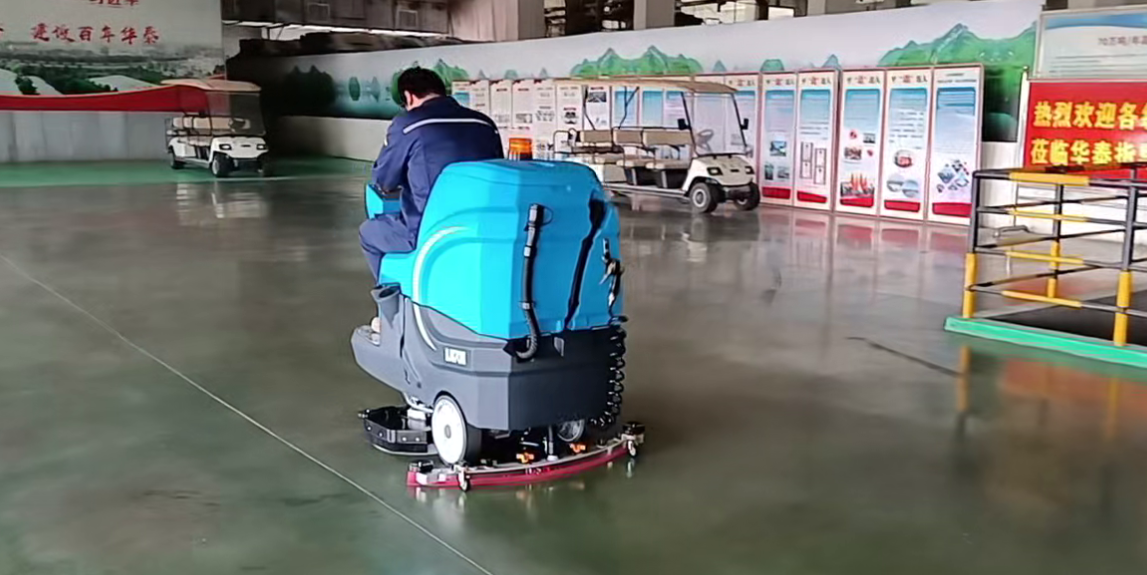
I. Never Reverse the Battery's Positive and Negative Terminals
Industrial floor scrubbers are typically equipped with high-capacity, high-power batteries with clearly marked positive and negative terminals. The wiring ports on the equipment also have specific corresponding specifications. Reversing the positive and negative terminals will directly damage the circuit protection components, causing major malfunctions such as controller burnout and battery bulging. In industrial settings, this can also pose safety risks. Correct Operation: Before wiring, carefully check the "+" and "-" markings on the battery and equipment to ensure consistent polarity before connecting.
II. Prolonged Standing in One Place During Operation is Strictly Prohibited
The heavy-duty brushes of industrial floor scrubbers rotate at high speed and rub against the ground, providing deep cleaning for workshop cement floors, warehouse wear-resistant floors, and other similar environments. Prolonged standing in the same spot will cause excessive friction, resulting in scratches, wear, and other irreversible damage. It will also accelerate brush wear due to uneven force. Correct Operation: Maintain a constant speed of 2.5–4 km/h during use, and avoid prolonged standing in the same area.
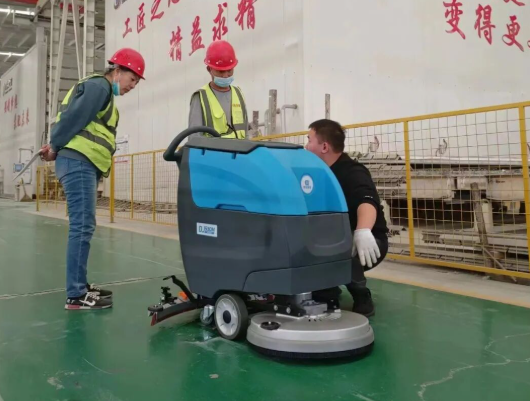
III. Washing the Fan Inlet is Strictly Prohibited
After operating in dusty or oily environments, special attention should be paid to protecting the fan inlet during cleaning and maintenance. Directly washing with water can allow moisture to enter the fan, causing short circuits and motor damage. Using strong acid or alkali cleaning agents will corrode the machine's metal body and anti-corrosion coating, reducing the equipment's lifespan. Correct procedure: First, block the fan inlet with a dry cloth, then wipe the machine surface with diluted neutral detergent. For residual dust and oil inside, use a special cleaning brush with low-pressure airflow to clean it.
IV. Frequent battery charging is strictly prohibited.
The lifespan of an industrial floor scrubber's battery is directly determined by the number of charge cycles. High-quality industrial batteries typically have a cycle life of 800-1200 cycles. Excessive charging will significantly shorten its lifespan. If you develop a habit of charging only when needed, the battery will be in a shallow charge/discharge state for a long time, gradually leading to a decrease in capacity and thus shortening the equipment's continuous working time. Correct procedure: Follow the principle of shallow discharge and deep charge. Charge when the battery level is 20%-30%, and ensure each charge is fully charged before disconnecting the power. Do not unplug the power midway through operation.